A True Story of Balancing Loss and Life With Dementia

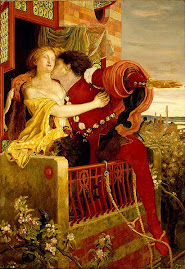
Featuring Romeo and Juliet Archer

We invite you to participate on this blog with us.
Please join the discussion, add comments,
ask questions.
Above all, sweet souls, learn and grow in love with all your being.


Tuesday, July 13, 2010

The Presence of a Caregiver and a Dementia Patient

It was morning, after breakfast, and Romeo sat stiffly on the overstuffed chocolate brown leather loveseat in the third-floor lounge. I, cross-legged with beige skirt draped all around, sat facing his side. Once again, we were the only souls in the room.

"Last night, as I was falling asleep," Romeo said, "I felt your presence with me, very strongly. It was gigantic. You were with me."

Romeo had not experienced my presence previously. But I knew what he meant. Even before Romeo was overtaken by dementia, before he lived in a nursing home, I could feel his presence with me when we were apart. Not always. But when it happened, it was an unmistakable experience. Unmistakably him.

A couple of weeks ago, while on a walk, I felt Romeo's presence. It was huge, perhaps because I was outdoors, and one can be very large out in nature. As I walked, his presence moved with me as if it were part of me. He was content, quiet, loving. It made me smile, and I "settled in" to the feel of the two of us moving down the path during that long walk.

I've also felt Romeo's presence while he still lived at home. The last time I felt him hovering about me, we were in two different parts of the house -- he in the bathroom getting ready for bed and me at my desk tapping away at the computer keyboard. Suddenly, very suddenly, I sensed a being to my right, in front of the fireplace. The presence was about 12 feet tall, and thin, almost like a stick. The presence was, of course, Romeo. He told me that he was just checking in on me, hanging out with me. Nice.

So now Romeo is sensing my presence with him. Good. Very good. This is perhaps a victory over -- or in spite of -- his dementia.

Monday, July 12, 2010

A Caregiver's Organic Changes at Home

"Romeo, things at home are changing slowly, organically since you don't live there with me anymore."

"What?"

"I mean that for starters, I've taken over the closet, since you don't need much space there anymore."

"Oh."

"I'm taking back the study, slowly moving my files and papers back into the big desk there. I had given you the study back in December 2006 and set up a small work area for me in the living room -- remember?"

"Oh."

"When you moved in with me in September 2005, we moved things around, combined two households into one, at my place."

"Oh, yes."

"Now I'm slowly moving things back to how they were before I knew you. I'm not making a conscious effort to do it. It's just sorta happening on its own. Because...well...because you're not there anymore."

He wipes away the tear running down my cheek.

"That's okay," he says. "I'm not here either."

"You're not? Where are you?"

"I don't know. Out there somewhere in the ethers."

Sunday, July 4, 2010

Flowers All Around for a Caregiver

Since Romeo has been in the nursing home, I have seen to it that there are fresh flowers in his room. He loves them so, and he welcomes their color and fragrance in an otherwise dull room. I am happy to bring him joy in such a simple way.

Quite by accident, I also discovered since Romeo has been in the nursing home that placing flowers in my bedroom, the room that Romeo and I once shared, helps to fill the void he left there so suddenly. I find myself puzzled as to how this can be so. How do flowers take the place of a husband? How can they be so comforting, so calming and soothing to my soul?

The answer might lie in the traditional symbolism of the flower itself. No matter the type of flower -- whether it be orchid, iris, tulip, lilac, chrysanthemum, rose, daisy, carnation, sunflower -- each one is generally a symbol of the passive principle in nature. The flower itself resembles a sort of cup, a vessel for receiving organic elements such as sun, dew, and rain that are responsible for their growth and existence. Flowers rise out of the ground merely by accepting these elements. Their passivity yields their manifestation.

So too, I think, with my life and Romeo's as we live with his dementia. Romeo and I are passive receivers, chalices for what the Universe has handed us. We have no choice, we cannot change Romeo's dementia. We did not bid it. It simply grew, somehow, with sun and dew and rain.

And as with flowers, colorful and fragrant reminders of the mystery of life, Romeo's life and mine continue to unfold into the future. As each one of us knows where we are ultimately headed, Romeo and I know where this will end. The flowers in his room and the flowers in my room are constant reminders that there is beauty in passivity. The flowers remind us to ride the waves of dementia, the waves of life, and to stop often to take in the dazzling colors, to breathe in the wonderful fragrances, and to let it all be. There is much beauty and mystery in all of it.

Saturday, July 3, 2010

The Love Dream of a Dementia Patient

Romeo had a "waking" dream, as he does from time to time. "It was about the stages of love," he said. "It was the most beautiful thing I've ever seen."

"Tell me about the dream," I said.

"I don't remember it."

"Tell me anything you remember, any small detail."

"It was beautiful."

"Yes?"

"It was about love in the spirit realm."

"Ah, not romantic love?"

"No."

"Agape?"

"Yes. It was beautiful. It's really all there is, you know, this love."

Romeo drifted off with his sketchy yet potent memories of the beauty of spiritual love, leaving me holding his hand and looking out to the darkening evening sky, grateful for his insights, his love, and the presence of his spirit. Always present with me, his spirit that does not have dementia.

"Agape," he said, "is more beautiful than romantic love. It prevails over everything."

Romeo is present whenever he speaks of spiritual matters. He's always right there, right here, on the topic. The dementia hasn't taken that from him. However, if the day ever comes when Romeo can't speak of such things, I know that his love, his spirit, which has marinated in love since the beginning of time, still remains. He's told me so, and I believe him.

Friday, July 2, 2010

The Roller Coaster of Emotions With Dementia

During a single day, during a single hour, sometimes during a single minute, Romeo's emotions, as well as mine, can climb to unbelievable heights and sink to lows just as unbelievable. We also experience everything in between. Riding it out has become one of the hallmarks of our lives, now that Romeo lives with his dementia in a nursing home, and while I live with his dementia shuttling from my home to his nursing home, to errands and events and other appointments.

The traditional roller coaster ride involves first a long, tall climb. You sit in the car as it slowly, slowly chugs up the steep incline. You think you might reach the top by sundown, but then you're there, poised at the top of the world, taking in the view, knowing that what goes up must come down. The anticipation of the drop sits in your stomach.

Since last summer, Romeo and I rode the quick pace of his dementia as it worsened, as he lost abilities to perform routine daily tasks like dressing himself. This steep upward incline, this escalation of loss, I knew, would one day arrive at the top, the place where there would be nowhere else to go but down. Still, we sat poised, watching the view, knowing all we could do was wait for the drop. That anticipation sat in my stomach, and I worked to let it out, to unblock it, to simply be in the present and enjoy the view as it was for now. Damn the dementia -- full speed ahead into life!

In the real world of roller coasters, after the clickety-clack, suspenseful climb to the top of the first incline, after taking in the enticing view from that height, after the lump of anticipation of the drop, comes the drop itself. Now the human cargo of the coaster raises its combined vocal chords in screams of fear, delight, laughter. They realize this roller coaster ride is a risk, yet a safe risk. They'll be fine.

In contrast, the roller coaster ride of dementia is certainly unnerving. My screams, however, have not been the screams of fear, delight, or laughter, but rather the anguished cries of loss and the fitful wails of disbelief and anger. Romeo and I have not ridden the roller coaster of dementia quietly. Like the real-life coaster riders on their first drop, we know that the dementia roller coaster ride is a risk, yet a safe risk. We know there are more bumps to come. Yet, we are fine. We will continue to be fine.

The roller coaster ride continues. A straightaway, then a small incline, then a small drop. But that first drop has unnerved all of its riders, and they scream during each new yet short drop as if it were that first one that nearly cleaned out their insides. They scream while riding the short drops that realistically should be a breeze. It's only a short drop, nothing at all like the first.

And so it goes on the dementia roller coaster. Again, with each new loss Romeo experiences, with each task he can no longer perform, comes a silent scream from my little mind as if it were that first gut-cleansing drop that unnerved me completely. These screams do not reach Romeo's ears. I tell him he's fine, and he is. Thank goodness he believes me. I tell myself that I'm fine, and I only half believe it. I know there is more to come, more drops, more screams.

Our real-life roller coaster ride now comes to an end. The coaster, after having climbed and dipped for several minutes over a steel and wooden landscape, comes to a rest where it began its predictable yet harrowing journey. The riders disembark, laughing, maneuvering on legs that have, in that short time, lost the feel for land. Some return to waiting family or friends to tell the story of every climb and drop. Others get back in line to ride again.

As for Romeo and I, our dementia coaster has not yet reached its destination. Our ride has not yet come to the end. We still ride the escalation of loss, we still sit in anticipation as we approach the top, not knowing quite where it is. We still admire the view as we move forward. We still scream silently during the drop, each holding tightly yet gently to the other.

When our ride has stopped, when there are no more climbs or dips or bumps, what then? It will be only me, Juliet, disembarking without my Romeo. I will exit the coaster, stand on the platform, look back longingly at each of the climbs and dips and bumps Romeo and I experienced. We are okay, I am okay. I will tell the story of every climb, dip, bump to anyone who will listen. But when the ride attendant pushes me along to the exit, will I be able to get back in line to ride again?